Wednesday, 23 November 2022

Let us get rid of the idea of a Work Life Balance

This was a post I made a few years back and I think its relevant to you and your teenage life. 

Work / Life Balance ......As a concept it was never going to work in the modern age. Balance your work and life …. What a joke! Why add yet another task to your already very demanding to-do list! Why beat yourselves up every year because you had made little or no improvement on your work/life balance.

So you are now free of this dreadful burden, and can now do what you want when you want to, keeping yourself and your key people in your life happy in whatever way you please.

Why has it taken us so long to come to our senses!!!!

F R E E D O M !!

The above does express my personal sentiment

WHAT NEXT?
Isn’t it great, what a wonderful feeling, but do I detect a hint of concern that nothing could be that easy?

What do we put in its place?

How do you keep your everyone happy?

Ahhhhhh! Glad you asked!

SIMPLER, SMARTER, QUICKER
Well yes, it really isn’t that easy, as you will need to learn a new way of managing your time, but it’s far more practical and it will give you immediate benefits, so let’s get going.

First I must get you thinking in a different way, as the investment manager of your Time Bank.

My guess is that up until now you have been making some pretty bad investment decisions but with a little bit of help we will get you on the right track. Let’s start by identifying your 'people'as they are rather important in this whole venture.

·      Partner (husband / wife),  Children,  Parents, Boss / Bosses boss,  Direct reports, Peers    Etc  How would each of your stakeholders rate you as a time investment manager?  Poor,  Fair,  Average,  Good,  Excellent

Let me guess, the people you care about the most tend to get the worst service? 

FUNNY THAT! 

Do you want to make a change?

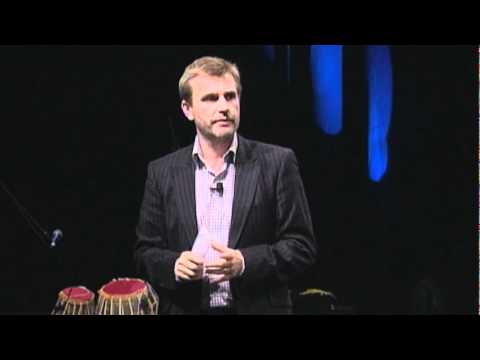
More to follow but for now  here is an interesting TED talk to start you thinking about how to invest in the small things that do make a difference.

Note: I love this video as the presenter combines humour with a lot of common sense.


Tuesday, 15 November 2022

Learning mindfulness with the Calm app

I learned mindfulness after a very sad time in my life. It is a wonderful life skill that everyone should learn! Recently we were heading to the O2 to go to the Andrea Bocelli show. We left Godalming at 4:00 leaving us plenty of time to get there (estimated time 1.5 hours) and have  something to eat before the show. Then the skies opened up and torrential  rain, multiple car accidents, a few wrong turns and we only got to the theatre at 6:40, 20 minutes before the show. I used mindfulness to calm myself down and didn't bash my steering wheel or say fuck once. I did my breathing exercises, calmed myself down, listened to my apple satnav and always believed that we were going to make it. We did make it and it was the most wonderful show and it wasn't spoiled by the drain of getting there. 

What is mindfulness?

After my wife died I attended a eight week course on ‘mindfulness for stress’ and it was life changing. I had long wanted to learn mindfulness, but always put it on the back burner as a nice to have. However, I desperately needed help, and it was no longer a nice to have, so I did it. 

I learned how to meditate, use breathing techniques, self compassion, accept my sad situation, but learned to be grateful for all the good things I still had in my life. I soon felt that I had more control over my life, that I could deal with my emotions better and then hope and my passion for living started to come back. 

After the training, initially I used the audio recordings from the course to continue my practice and then experimented with various apps. The app I kept coming back to was Calm, which I liked a lot.


My advice to everyone is learn mindfulness NOW, don't wait for a life event to compel you to find help. There are enough challenges in the world to justify you investing in mindfulness training. You don't have to attend a training course to start practising, just use the Calm app.

The Independent summarised it as follows:-

Open the Calm app and you’ll immediately be greeted with the gentle sound of the outdoors. It varies from person to person, but we loved this touch and found it helped us on the path to relaxation (you can change it to rolling waves, pouring rain, crackling firewood or crickets). 

We loved Calm when we tested it previously, particularly its guided Daily Calm sessions, which helped us unwind and refocus our attention. But the app has bolstered its already-great offering this year, with the addition of a new daily meditation series called the Daily Trip. Narrated by Canadian author and meditation teacher Jeff Warren, the Daily Trip offers a more adventurous – and enjoyable – practice. We found we learned more in these daily sessions than any of the others we tested. 

If you fancy something a little different, you can also pick from exclusive music tracks engineered to help you focus, relax or sleep, including remixes from stars Sam Smith and Ellie Goulding. There are also several new celebrity-narrated “sleep stories”, with calming tales from the likes of former One Direction star Harry Styles, and actors Idris Elba, Cillian Murphy and Chiké Okonkwo. We got a childish pleasure out of these and found they helped us unwind in the evenings, bringing back the nostalgia of being read a bedtime story. 

The latest version of the app includes a new gratitude check-in feature, which we used to remind ourselves of the things we’re grateful for each day. With plenty of content and at just £29.99 for a subscription that lasts the whole year (there’s no monthly offer but that equates to just under £2.50 a month), we also think this app is great value.


My partner and I regularly use the sleep stories and they work, dare I say it, like a dream! We reckon we are getting at least 2 to 3 hours more sleep each night which makes a difference to our health and energy levels. We take in the daily calm and daily trip, love Tamara and Jeff. 

The following video is a little demo I recorded a while ago covering what to expect from the Calm app. 


Wednesday, 9 November 2022

The power of the simple checklist

 Many years ago when I was doing my TQM facilitator training I was introduced to the simple checklist. It was so simple that I rather arrogantly looked down my nose at the concept.

The Collins definition:

A checklist is a list of all the things that you need to do, information that you want to find out, or things that you need to take somewhere, which you make in order to ensure that you do not forget anything.

When I started to run a lot of training courses I was guided by a productivity coach to use checklists. My training department and I developed a one day training course to introduce everyone to total quality. We were about to run the course for over 300 people spread over a 12 month period. What we did as a team was to brainstorm all the tasks we needed to get done in order to successfully run each one day course. From our brainstorm we were able to create a master checklist. Each task was broken down into logical grouping and sorted into date order. In those days we did everything in paper so we opened a folder for each course and glued the checklist onto the inside cover. This meant that anyone in the training department could pick up a folder and see how well it was progressing. It was a fantastic demonstration of how a simple checklist can help improve the productivity of a whole department.

I still use checklists, particularly when I travel. The screenshot is of a cruise we did on the Duoro in Portugal. I now use Apple Reminders for my checklists and have saved the layout as a template ready for my next trip. The photo below gives you an idea of some of the many steps you have to go through for each holiday. You will note that 'English Breakfast Tea' is not ticked. This is because we couldn't get a decent cup of tea, so we added it to the checklist to make sure we always take tea bags with us when we go on holiday. (Oh dear I am now officially old!)


This video gives you a very good idea on how to use Apple Reminders to improve your productivity. It is particularly useful if you have an iPhone, iPad and Apple watch.


Tuesday, 1 November 2022

Accelerate your learning - V.A.K. learning styles

As part of my development as a trainer I was introduced to VAK learning styles, a model of learning designed by Walter Burke Barbe and later developed by Neil Fleming.

The VAK learning model divides people into three categories of learner:

  • Visual learning style involves the use of seen or observed things, including pictures, diagrams, demonstrations, displays, handouts, films, flip-chart, etc.

  • Auditory learning style involves the transfer of information through listening: to the spoken word, of self or others, of sounds and noises.

  • Kinesthetic learning involves physical experience - touching, feeling, holding, doing, practical hands-on experiences.
Here is a link to a questionnaire if you would like to assess your learning style.

VAK Questionnaire plus a nice energetic quiz and tips.


In my experience it not so cut and dry and I think people have a combination of all three styles. I know in my own case I do have a preference, particularly in the early stages of learning for visual material. This gives me the 'roadmap' that I will follow. It was with this in mind that years ago I attended a 'Graphic Facilitation' training course and it blew my mind. I learned how to create 'Learning Maps' and participants to my workshops loved this method of teaching. BUT, the learning map was just the launch pad to multiple learning activities that effectively used all the styles. Thinking back, the learning map provided the meaning behind what we were doing and the content just look a lot more cool and fun. 

I remember running a workshop in Ghana, just using a colourful learning map on a flip chart. As I was enthusiastically explaining the map, one of the participants, smartphone in his hand said 'Ian can I film you explaining the learning map'. Of course I loved the spontaneity and said 'yes but please share it with the group'. We were effectively combining visual, auditory and kinesthetic ... and it wow did it work!

HOWEVER be aware .....
The belief in learning styles is so widespread, it is considered to be common sense. Few people ever challenge this belief, which has been deeply ingrained in our educational system. Teachers are routinely told that in order to be effective educators, they must identify & cater to individual students' learning styles;  it is estimated that around 90% of students believe that they have a specific learning style but research suggests that learning styles don't actually exist!  This presentation focuses on debunking this myth via research findings, explaining how/why the belief in learning styles is problematic, and examining the reasons why the belief persists despite the lack of evidence.

So please watch this TED talk


Monday, 17 October 2022

Accelerate your learning - mind mapping

In today's world with the incredible speed of change you have to find ways to learn quickly. One of the techniques I encountered through my training life was mind mapping. We had set up a learning centre in our office and we bought a video that explained mind mapping which sounded quite interesting. By coincidence, shortly afterwards, I happened to be sitting next to someone at a conference I was attending and I noticed that she was creating a mind map for each talk. She had a A5 size note book and pens with different colours. In one of the breaks I asked her how she came to learn mind mapping. She told me that their team had decided to learn mind mapping for a period of three months and then the use of the technique was optional. They discovered that 8 out of the 10 members of the team continued to mind map and used it for just about everything. So I started too and years later I still use it. We had the daughter of a member of staff working in our learning centre during her gap year before university. I encouraged her to start using mind mapping and she took to it in a big way. She went on to Cardiff university and used it for all her lecture notes. When it came to revision she created mind maps of mind maps and passed her degree with top marks.

The video we had in our learning zone was by Tony Buzan and here is a short video where he explains mind mapping.


Here is an explanation of how to use mind mapping.


A lot of my mind mapping has been using multi coloured pens and a sketchbook. Then I decided sometime back that I wanted a mind mapping app that I could use on my iPhone and iPad. Having looked around I decided that iThoughts gave me everything I wanted and it has served me well.

I've recorded a short video to show how I have used iThoughts to capture my personal vision as a happy retiree.


Monday, 3 October 2022

Developing your personal vision and values

I was very fortunate to spend a good chunk of my training and coaching career developing young leaders. With the help of two amazing external trainers we developed an 'Inspirational Leadership Programme'. 

Creating a personal leadership vision

On day 3 of the programme we helped leaders to develop their personal visions and it was such an inspiring part of the programme, for both participants and trainers. My personal vision, which I had to showcase/role model for the participants, started off something along the lines of 'Releasing the Potential of People'. Then (as I found that a bit boring) it evolved to 'Releasing the Magic in People' and when I decided, feeling a bit embarrassed, to declare to the 19 people in the training room, that my vision was to 'Releasing the Magic in 100,000 People'. This by default meant  that to get to 100,000 people I would have to motivate an army of people to be able to achieve my vision. Shortly after I launched my ambitious vision, I was asked by Nestlé Head Office to provide the coaching content for a programme to be rolled out across the whole of Nestlé global world. The the coaching programme my team and I had developed for Nestlé Purina was to be used across the whole Nestlé world. WOW ..... I guess in some little way I did contribute to releasing the magic in over 300,000 people. After I retired in 2010 I set up my business 'Release the Magic' and ran it very successfully for 10 years, reinforcing the benefit of having a vision.

How to create your vision

I will always remember one of the trainers saying that having a vision allowed you 'to see the image of the cathedral as you mixed the cement'. You always keep in your mind what it is that you are setting out to achieve.

For guidance on how to create a personal vision I found the following web site.

https://liveboldandbloom.com/03/self-improvement/personal-vision-statements

  1. List your personal strengths.
  2. List your personal weaknesses.
  3. Write down your core values.
  4. Think about how your values should guide interactions with family, at work, and within your community.
  5. Consider the best uses for your life energy based on your inner compass and values.
  6. Identify some specific goals that you want to pursue.
  7. Imagine the legacy of your purpose, goals, and actions.
  8. Examine your notes to see what jumps out as most important.
  9. Compose a paragraph that summarizes your priorities in the form of a vision statement

How great leaders inspire action

Before embarking on developing your personal vision, please watch this video from Simon Sinek, viewed by nearly 17 million people! I think he has captured the very essence of how to create a personal vision. 


I will go into more detail in our future coaching sessions as I help you to create your first life vision. 

The following is how I applied the golden circle to my business. How I used WHY and HOW to create a business that I loved running.


Monday, 26 September 2022

The Growth Mindset

When my daughter in law was studying to become a teacher she introduced me to the  Growth Mindset. 


What I have discovered via Google was:-

Every so often a truly ground breaking idea comes along and the Growth Mindset is one.

  • Why brains and talent don’t bring success
  • How they can stand in the way of it
  • Why praising brains and talent doesn't foster self-esteem and accomplishment, but jeopardizes them
  • How teaching a simple idea about the brain raises grades and productivity
  • What all great CEOs, parents, teachers, athletes know

The Growth Mindset is a simple idea discovered by world-renowned Stanford University psychologist Carol Dweck in decades of research on achievement and success—a simple idea that makes all the difference.

In a fixed mindset, people believe their basic qualities, like their intelligence or talent, are simply fixed traits. They spend their time documenting their intelligence or talent instead of developing them. They also believe that talent alone creates success—without effort. They’re wrong.

In a growth mindset, people believe that their most basic abilities can be developed through dedication and hard work—brains and talent are just the starting point. This view creates a love of learning and a resilience that is essential for great accomplishment. Virtually all great people have had these qualities.

Teaching a growth mindset creates motivation and productivity in the worlds of business, education, and sports. It enhances relationships. When you read Mindset, you’ll see how.

The following excellent video really illustrates what we should be doing with the development of our children, and as I found out it could be applied to adults as well.


This is another video explaining the Growth Mindset/


Tuesday, 20 September 2022

The Power of Conversation

After many years of coaching individuals and teams, I observed that the people that tended to succeed as leaders were those that were able to harness the full power of conversation. People seemed to love working for these leaders for the following reasons:-

- They had developed a high degree of mutual trust

- Ideas and views flowed easily 

- People were not talked over and everyone was given enough airtime to express their views

- People felt respected 

- Conversations were well facilitated with people ‘encouraged’ to get to the point and as a result meetings were well managed and outcomes were delivered

- There was a good balance of challenge and encouragement


I’ve recorded a short video to provide you with an overview of the value and skills of  powerful conversations. During your coaching programme you will work on the component skills such as .Listening with Empathy’, ‘Asking Thoughtful Questions’. Etc


Tuesday, 13 September 2022

Get a L.I.F.E.

 When I was developing the Simpler Smarter Quicker programme I spent time analysing where people allocated their time and energy each day. I tried many categories until I finally felt I had a solution and I liked the word that, with a bit of creative license, became the acronym.

I started off with two categories that came out of my early training on continuous quality improvement. I remember the trainer saying we all have two jobs, doing our job and improving our job.  

I took the initial categories and called them Everyday Routines and Improvement Projects. Then when I analysed deeper I realised there was a category that wasn't accounted for. It was for non value added activities like correcting mistakes, commuting, office chatter and wasted time at meetings. I called this category Fuzzy Stuff. Finally one of the most important categories was Leisure, the category that makes work worthwhile. Going out and having fun, enjoying your family and friends. 


I asked teams to estimate on an average working day how they would split their hours. That is each day from the time they woke up until they went to sleep at night. Over many teams, consistently, they all complained that they had very little 'pure quality leisure' time. They recognised big chunks of waste / non value added activity in Fuzzy Stuff. Everyday Routines were taking too long and left little time for Improvement Projects. This simple analysis proved to be a very powerful wake up call. 

Typically people looked at Fuzzy Stuff and identified areas that could be saved. Pre-pandemic this quite often meant staying at home one day each week, saving commute time and investing that time into leisure e.g. early end to Friday.

Then by focusing on one area at a time, the amount of time spent on everyday routines could be reduced and the saved time repurposed as improvement time.

During the coaching sessions, even though the assessment of how the 'pie' was split was inexact, it provided a broad brush to support sensible improvements. It also gave team members a language that they all easily understood. 

It also supported the need to make changes to GET A LIFE!!!


Friday, 9 September 2022

Understanding your Comfort Zone


It was on Jay Shetty's programme that I first became fully aware of the detail of the Comfort Zone.


My next blog post will cover my take on the whole area of the comfort zone and how to escape it and grow. 

Escaping your Comfort Zone

 This is my take on the comfort zone and how to exit from its clutches.


To summarise this module

The comfort zone is not a bad place to be. You feel safe, you have the right skills and your anxiety levels are very low

The problems happen when your motivation levels drop, you know you not growing BUT you don’t have the courage to take the first step

What this module explains is that there is a process and with the help of a coach, you can manage your anxiety and move on

Getting through the fear zone into the learning zone can be fun and fulfilling and you are GROWING!


Thursday, 8 September 2022

Life skills for young adults

I am busy watching 'The Time Travelers Wife', a series on the TV. Henry, the key character, is an ordinary man with an extraordinary gift, a gene that allows him to travel through time involuntarily. The time travelling takes some doing, so adult Henry is able to go back in time and help young Henry to learn to live with his time travel ability.


As a retired trainer, coach and facilitator with many years in leadership, team and personal efficiency development, I have asked myself this question. If I could time travel back to Ian aged 17, what advice would I give him and what life skills would I teach him, that would enable him to live a more fulfilling life. I feel at 78 that I have lived a meaningful and very happy life, but I know along the way I could have benefited from coaching from an older Ian. Coaching would not have changed the route of my learning journey, but I think I would have appreciated and learned more from the learning events I encountered along the way.


The picture on the left was taken in the prefects cottage (called the bush and yes we were allowed to smoke) at Plumtree School in (what is now) Zimbabwe. 

Advice I would give young Ian:-

  1. Focus on LESS = MORE (by focusing on the few areas that really matter, you will achieve far more). 
  2. Communicate in a simple but compelling way, making sure people get the message and buy in to what you want to change.
  3. Assume nothing ... always ask questions to clarify.
  4. Success and happiness are seldom the same thing, so periodically check to make sure you are not sacrificing too much of your happiness for your success.
  5. Forget the rule book but always live by your personal values.
    1. Put family first and let them know through your behaviour how much they mean to you.
    2. Surround yourself with caring and challenging friends.
    3. Trust, being open and honest is fundamental to all relationships.
    4. Keep life simple and easy to manage.
    5. Have fun, be free, enjoy life ...be HAPPY.

Skills I would teach young Ian:-

  1. How to live a mindful life. [WHY: I learned mindfulness late in my life and wished I had been able to meditate, switch off autopilot and achieve a calm state during my youth]
  2. How to work simpler, smarter and quicker.[WHY: my time management / personal effectiveness was rubbish up until I completed a personal efficiency programme. That transformed the way I worked and helped me achieve more in less time plus improved my work life balance]
  3. How to communicate effectively. [WHY: learning presentation skills, influencing skills and the storyboard approach gave me a powerful skill that served me well throughout my career]
  4. How to solve problems. [WHY: Exposure to quality improvement taught me tools and techniques that I could apply to solving problems and I have used them ever since for work and life
  5. How to make decisions. [WHY: Possibly one of the most powerful tools that I learned in my 30s and have used ever since]
My proudest coaching challenge now awaits me

My two awesome 17 year old granddaughters, are into the second years of their A levels and then they are destined to go on to university to do meaningful degrees. Well the good news is that have accepted me as their life coach ... a very proud moment!

So we have decided that the starting point will be for me to help them to approach their lives in a Simpler Smarter and Quicker way. 

I admit I'm a bit rusty using the latest version of Camtasia but I have recorded a 12 minute video to explain what Simpler Smarter Quicker will cover.


I will be using this new blog to share hints, tips, tricks and skill modules that I believe will help my granddaughters succeed in life. Helping them to achieve their full potential but with plenty of fun, laughter and happiness.

Let us get rid of the idea of a Work Life Balance

This was a post I made a few years back and I think its relevant to you and your teenage life.  Work / Life Balance   ......As a concept it ...